- Blog
- 2026/08/24
Quick Answer
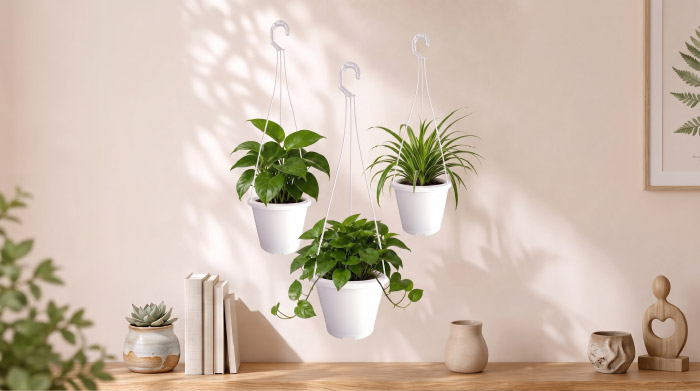
A plastic hanging pot is a lightweight, injection-molded planter fitted with an integrated or attachable hanging mechanism — typically a molded rim lip paired with a wire, chain, or rope hanger — designed to suspend plants from a bracket, hook, or overhead structure rather than sitting on the ground. Because hanging pots must support the full weight of wet soil and a mature plant from a small number of attachment points, hanger strength and rim reinforcement matter as much as the pot body itself. Most commercial hanging pots are molded from UV-stabilized polypropylene or HDPE and include a built-in drainage system designed to prevent drips onto whatever is below the hanging point.
What Makes a Hanging Pot Different from a Standard Planter
A standard floor or bench planter only needs to support its own weight resting on a flat, stable surface, but a hanging pot must support that same load — often ranging from several kilograms of wet soil plus the plant itself — entirely through its hanger attachment points, with no supporting surface underneath. This fundamentally changes the engineering priorities: rim strength, hanger attachment integrity, and drainage control that avoids dripping become central design requirements rather than secondary considerations.
- The hanger attachment points must be reinforced to carry the pot's full loaded weight without deforming or pulling free from the pot body
- Drainage needs to be managed carefully, since water dripping from an elevated hanging pot can damage whatever is positioned below it
- Wind exposure for outdoor hanging pots adds a swinging and rocking load that a ground-set planter never experiences
[Please provide image URL and ALT text]
Hanger Types and Attachment Methods
|
Hanger Type |
How It Attaches |
Best Fit |
|
Molded rim lip with wire hanger |
Wire hanger clips or hooks into notches molded directly into the pot's rim |
Standard lightweight-to-medium hanging pots |
|
Chain hanger with saucer bracket |
Chain connects to a separate saucer bracket that cradles the pot from below |
Larger or heavier pots needing extra load support |
|
Rope or macrame hanger |
Rope loops through the pot body or a dedicated hanger bracket |
Decorative retail planters prioritizing appearance |
Pots designed for heavier plants or larger soil volumes generally benefit from a saucer-style bracket that cradles the base of the pot in addition to any rim-mounted hanger, since this distributes load across a wider support area rather than relying entirely on rim-mounted attachment points.
Drainage Without Drips
Because hanging pots are positioned above floors, patios, or other plants, drainage design has to balance root health against the practical problem of water dripping onto whatever is below. Many commercial hanging pots use a built-in saucer or reservoir molded into the base of the pot itself, which collects excess drainage water and allows it to slowly evaporate or be manually emptied, rather than letting it drip continuously.
- Integrated base reservoirs collect drainage water without letting it drip immediately onto the surface below
- Removable drip trays allow growers or retailers to periodically empty accumulated water
- Some designs include a secondary overflow hole positioned above the reservoir's maximum fill line to prevent the reservoir itself from overflowing during heavy watering
Materials and UV Resistance
Because hanging pots are almost always used outdoors or in bright interior spaces, UV-stabilized polypropylene or HDPE is standard for commercial-grade products, since unprotected plastic exposed to constant overhead sun exposure degrades faster when hanging in full light than when partially shaded at ground level. UV resistance should be validated for the pot's expected multi-year outdoor exposure rather than assumed from material type alone, since UV stabilizer concentration varies between suppliers even within the same base resin.
Size and Weight Capacity
|
Pot Diameter |
Typical Loaded Weight |
Recommended Hanger Type |
|
6 to 8 inches |
Under 2 kg loaded |
Standard molded rim lip with wire hanger |
|
10 to 12 inches |
2 to 5 kg loaded |
Reinforced rim hanger or chain with saucer bracket |
|
14 inches and above |
5 kg and up loaded |
Chain and saucer bracket system rated for heavier loads |
Buyers and growers should size the hanger and bracket system to the pot's fully loaded weight — wet soil plus a mature plant — rather than the pot's empty weight, since underestimating loaded weight is one of the most common causes of hanger failure in the field.
[Please provide image URL and ALT text]
Indoor vs. Outdoor Hanging Pot Considerations
Outdoor Hanging Pots
Outdoor hanging pots need UV-stabilized material, wind-resistant hanger attachment, and drainage systems designed to handle heavy rainfall in addition to routine watering, since an outdoor pot may need to shed significantly more water volume during a storm than a similarly sized indoor pot ever receives.
Indoor Hanging Pots
Indoor hanging pots place more emphasis on drip control and aesthetic finish, since there is no rain to account for but any dripping directly affects flooring or furniture below, and indoor hanging planters are frequently chosen as much for decorative appearance as for plant health.
Wind Load and Outdoor Mounting Considerations
An outdoor hanging pot swinging in the wind experiences repeated, cyclical stress on its hanger attachment points that a stationary indoor pot never encounters, which over time can loosen or fatigue a hanger connection that would otherwise be adequate for the pot's static loaded weight. Bracket and hook hardware rated for the pot's static weight alone may not account for this added dynamic wind load, so outdoor installations — particularly in open, exposed locations — benefit from hanger hardware with a safety margin above the pot's simple loaded weight rating.
- Choose mounting hooks and brackets rated with a safety margin above the pot's static loaded weight to account for wind-driven dynamic load
- In consistently windy locations, a shorter chain or hanger reduces swing distance and the resulting stress on attachment points
- Periodically inspect hanger attachment points on long-term outdoor installations, since UV exposure and repeated flexing can weaken plastic hanger components over time
Color and Retail Merchandising
Hanging pots are frequently sold as much for visual appeal as function, since they are typically displayed at eye level in garden centers where color and finish directly influence purchase decisions. Manufacturers commonly offer a broader color range for hanging pots than for utilitarian ground planters, along with textured or faux-material finishes designed to complement seasonal retail merchandising themes.
OEM and Custom Hanging Pot Manufacturing
Garden retailers and branded plant sellers commonly work with manufacturers to develop custom hanging pot designs matched to their product line, particularly around hanger style, color, and integrated drainage system design.
1. Specify Requirements
Buyer specifies target pot sizes, expected loaded weight range, and hanger style preference.
2. Manufacturer Proposal
Manufacturer proposes rim reinforcement, hanger attachment design, and drainage system suited to those requirements.
3. Sample Testing
Sample pots are load-tested and evaluated for drainage performance before finalizing the design.
4. Tooling and Bulk Production
Production tooling is completed and bulk manufacturing begins once samples are approved.
Maintenance Tips for Hanging Pots
- Check hanger attachment points periodically for cracking, stretching, or UV-related brittleness, especially on pots in their second or later outdoor season
- Empty built-in drainage reservoirs regularly to prevent stagnant water buildup, which can attract pests and promote root disease
- Rotate hanging pots occasionally if only one side receives direct sun, helping the plastic weather more evenly across the whole pot surface
Common Mistakes When Sourcing Plastic Hanging Pots
- Sizing the hanger system to the pot's empty weight rather than its fully loaded weight with wet soil and a mature plant
- Choosing a decorative rope or macrame hanger for a pot size and weight better suited to a reinforced chain and bracket system
- Overlooking drip control, leading to water damage on surfaces or plants positioned below the hanging pot
- Selecting non-UV-stabilized material for pots intended for long-term outdoor hanging use
- Assuming a standard planter's drainage design will work equally well once the pot is hung rather than set on the ground
How to Choose a Plastic Hanging Pot Manufacturer
- Confirm hanger and rim reinforcement are rated for your pots' fully loaded weight, not just empty weight
- Request drainage and drip-control test data rather than relying on general product descriptions
- Verify UV stabilization level matches your product's expected outdoor exposure and service life
- Ask about custom color, hanger style, and branding options for retail or private-label product lines
- Compare minimum order quantities and lead times for standard designs versus fully custom hanger and drainage configurations, and confirm whether hardware is pre-attached or shipped separately
Shipping Hanging Pots Efficiently
Because hanging pots include hanger hardware in addition to the pot body, packaging and shipping require slightly more planning than a standard nesting planter, since loose chains or wire hangers can tangle or scratch pots during transit if not secured or bagged separately. Manufacturers experienced in hanging pot production typically bag or secure hanger hardware to the pot body before cartoning, reducing both tangling during transit and the labor required to assemble hangers after unboxing at the retail or nursery end.
[Please provide image URL and ALT text]
Frequently Asked Questions
Q1. How much weight can a plastic hanging pot hold?
It depends on the hanger design, but standard rim-lip hangers typically suit pots under 2kg loaded, while larger pots need a reinforced chain and bracket system.
Q2. Do hanging pots need special drainage design?
Yes — many use an integrated base reservoir or removable drip tray to prevent water from dripping continuously onto whatever is positioned below.
Q3. Is UV-resistant plastic necessary for hanging pots?
Yes, especially for outdoor use, since hanging pots typically receive more direct, unshaded sun exposure than ground-level planters.
Q4. What is the difference between a wire hanger and a chain and bracket system?
Wire hangers suit lighter pots attached at the rim, while chain and bracket systems distribute load across the pot's base for heavier, larger pots.
Q5. Can plastic hanging pots be used indoors?
Yes, indoor hanging pots generally prioritize drip control and aesthetic finish since UV exposure and wind loading are less of a concern indoors.
Q6. Why do some hanging pots have a built-in reservoir?
An integrated reservoir collects excess drainage water so it does not drip immediately onto surfaces or plants positioned below the pot.
Q7. Can hanging pot hangers be customized for branding or retail packaging?
Yes, many manufacturers offer OEM or ODM services for custom hanger styles and colors for retailers and garden centers.
Q8. What causes a hanging pot's hanger to fail?
The most common cause is underestimating the pot's fully loaded weight with wet soil and a mature plant when selecting the hanger system.
Q9. Should hanging pots be inspected periodically?
Yes — hanger attachment points should be checked periodically for cracking or UV-related brittleness, particularly on pots in their second or later outdoor season.
Conclusion
Choosing the right plastic hanging pot depends on matching hanger strength, drainage design, and material UV resistance to how and where the pot will actually be hung, since hanging pots face structural and drainage demands that standard ground-set planters never encounter. Getting hanger sizing and drip control right upfront prevents the two most common field failures: dropped pots and water damage to whatever sits below.
For retailers and garden centers sourcing hanging pots at volume, working with a manufacturer that can validate load capacity and drainage performance with real testing — rather than relying on the pot body's material specification alone — is the clearest path to a product that performs reliably once it leaves the shelf and is actually hung and watered. A hanging pot that looks identical to a competitor's on a retail shelf can behave very differently once loaded with wet soil and exposed to months of outdoor wind and sun, which is exactly why hanger and drainage engineering deserve as much attention as the pot's visual design.