- Blog
- 2026/07/17
How to Choose a Garden Retaining Board: TL-515 Tree Landing Fence
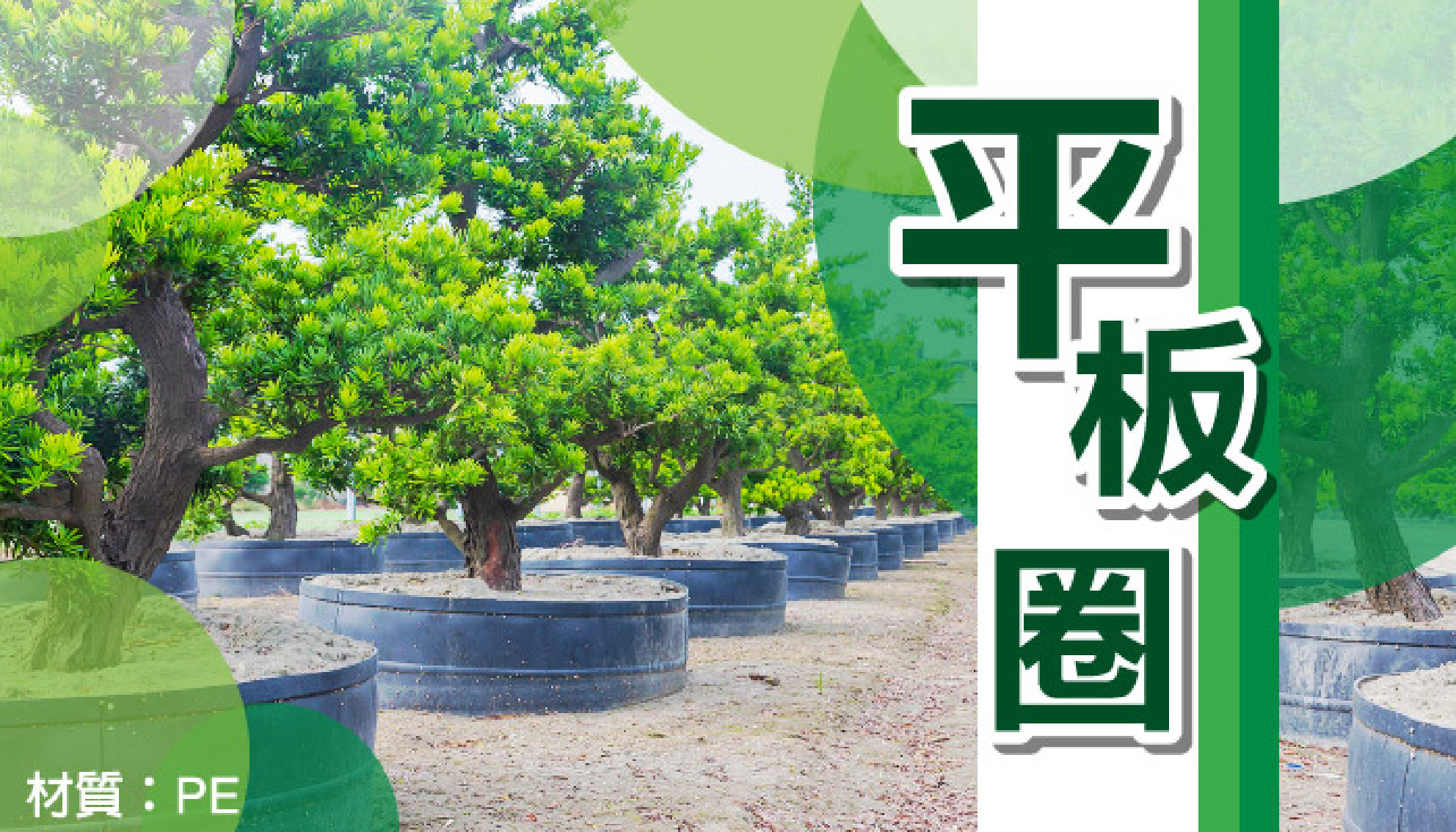
Soil erosion, uncontrolled root spread, and waterlogging after rain are some of the biggest headaches for gardeners and growers when planting flowers, trees, or building landscaped gardens. The “retaining board,” “black board,” or “soil divider” commonly seen on the market all refer to the same type of product — a black plastic board used to contain soil and define a planting area. But can traditional methods really solve every problem? As cultivation techniques have evolved, the “raised-bed method” paired with modular Tree Landing Fences is gradually becoming a new option for landscape gardening and economic tree cultivation. This article walks through the limitations of traditional retaining boards and how to choose the right retaining solution for different planting scenarios.
What Are the Limitations of Traditional Retaining Methods?
Before Tree Landing Fences became widespread, the two most common soil-containment methods in gardening and agriculture were the “soil mounding method” and the “traditional black board.” Both, however, come with clear practical drawbacks.
Problems with the Soil Mounding Method
The most basic approach is simply piling up soil to form a raised bed. This looks simple but is actually quite labor-intensive in practice: since the mound's edges have no supporting structure, rain or irrigation easily washes soil, water, and fertilizer away from the edges, significantly reducing planting effectiveness. To maintain the mound's shape, most people also need to insert bamboo stakes for extra support — which is time-consuming, and the stakes tend to rot and loosen over time, requiring repeated maintenance.
Problems with Traditional Black Boards
A somewhat more advanced approach is to use commercially available retaining boards (black boards), bent into a ring and secured by hand-tied rope. While more stable than soil mounding, tying with rope is ultimately a temporary joining method — after prolonged exposure to sun and rain, the knots tend to loosen and the boards shift out of place. This is especially problematic for large-scale planting or economic crops that require long-term stability, where maintenance costs keep rising over time. In addition, traditional retaining boards typically come in fixed-width rolls, so irregularly shaped planting areas require extra cutting and joining, limiting construction flexibility.
The shared problem with both traditional methods: they only address the surface-level need to “contain soil,” without considering deeper cultivation logic such as root growth, water management, or transplanting efficiency.
What Is the “Raised-Bed Method”? A New Generation of Garden Retaining Solutions
In recent years, the “raised-bed method” has become an increasingly discussed cultivation approach in landscape gardening and economic tree cultivation. Simply put, the raised-bed method elevates the planting surface and combines it with imported soil, allowing plant roots to grow in a relatively dry, well-aerated environment — addressing inherent limitations such as poor drainage in low-lying terrain or unfavorable soil conditions.
Principle of the Raised-Bed Method: Elevating the Planting Area, Preventing Flooding, and Using Imported Soil
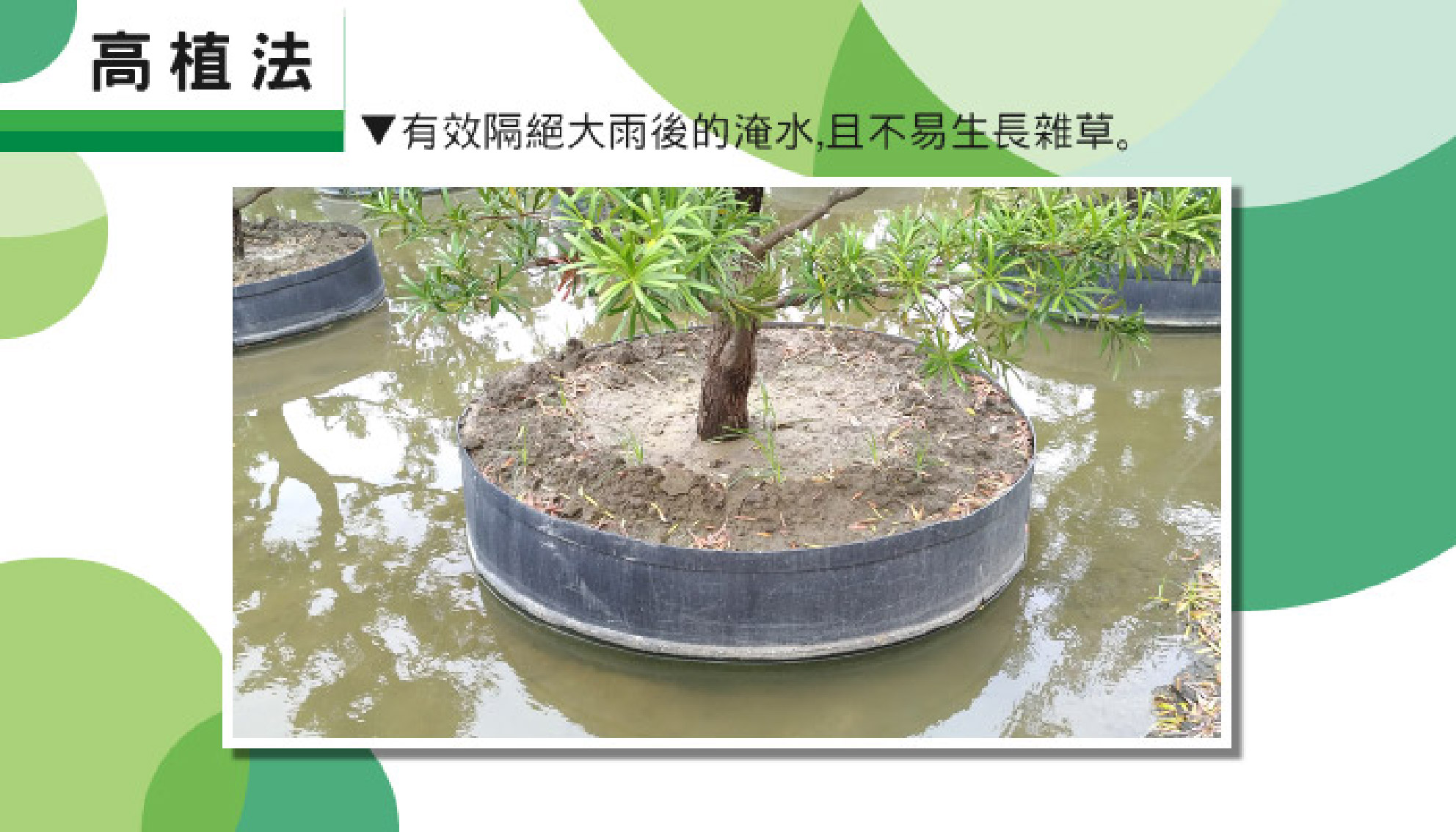
The core concept of the raised-bed method is to use a retaining structure to elevate the planting area, lifting plant roots above ground level that is prone to waterlogging. This is especially helpful for low-lying areas with poor drainage, or areas where the native soil isn't suitable for planting — even when the original soil conditions aren't ideal, suitable growing medium can be filled directly into the elevated planting area, avoiding the need for large-scale soil improvement across the whole site and significantly reducing site-preparation costs.
Benefits for Root Systems and Transplanting: Root Ball Development, Water & Fertilizer Retention, Mechanized Transplanting
When paired with a structurally complete retaining board, the raised-bed method also allows plants to naturally form a concentrated root ball as they grow. The benefit of concentrated root growth becomes especially clear at transplanting time: a complete root ball means the roots are tightly bound with the surrounding soil and retain water well, so post-transplant survival rates are naturally higher than for plants with scattered, exposed roots. For nurseries and economic tree growers that handle large volumes of transplanting, machinery can lift and dig the root ball directly, greatly shortening the time needed per plant and reducing the risk of root damage during transplanting.
At the same time, the retaining structure also provides a water-and-fertilizer-retention effect: applied fertilizer and water don't easily wash outside the planting area the way they do with soil mounding, allowing roots to absorb nutrients more efficiently and reducing fertilizer waste.
How to Choose TL-515 Tree Landing Fence Specifications and Sizes
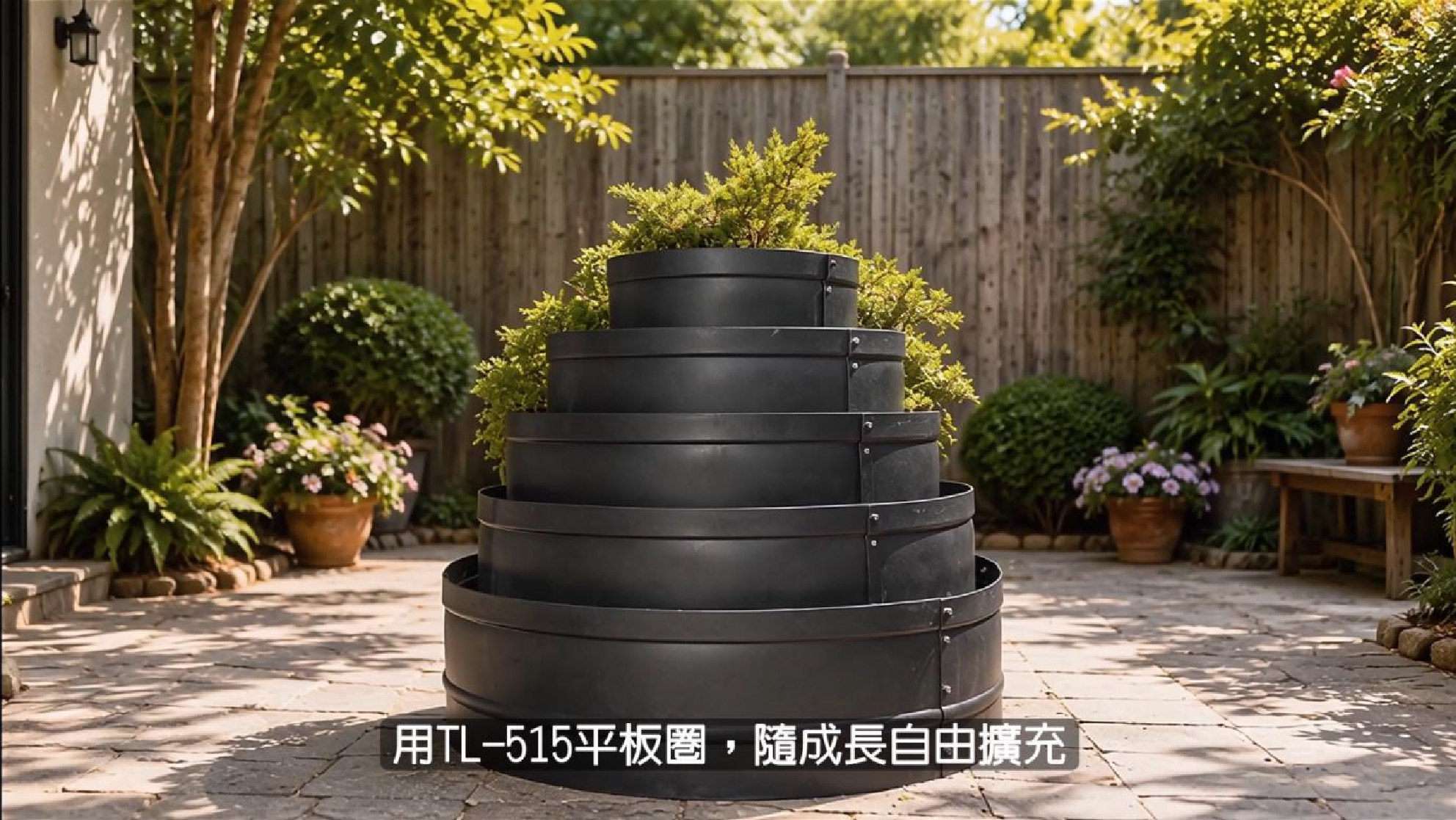
Once you understand the principle behind the raised-bed method, the next step is choosing the specific product specification. Take Aiermei's TL-515 Tree Landing Fence as an example — it comes in 10 size combinations, freely combining two widths with five heights.
The biggest advantage of this modular design is that the panels can be freely connected like building blocks, letting you combine the size that best fits the actual planting area and plant needs, without being limited to a single fixed specification.
Size Recommendations for Different Scenarios
- Home flower beds, potted plants: A single ring works well — small area, easy to handle, ideal for a mini garden or flower bed on a balcony or in a corner of the yard.
- Economic tree cultivation, large-scale landscaping: A compound combination is recommended, allowing larger planting areas to be assembled, suitable for the scale of park greenspaces or landscape construction projects.
- Choosing height for shallow-rooted crops vs. deep-rooted trees: For shallow-rooted crops or general vegetables, a lower height (such as 30H) is enough to meet the required soil depth. For economic trees with deeper root systems, or areas requiring a large amount of imported soil, a taller specification (such as 76H or 91H) is recommended, ensuring roots have sufficient room to grow while making full use of the raised-bed method's flood-prevention benefits.
Because Tree Landing Fences can be freely connected and combined, actual planning doesn't need to be limited to a single size — length and height can be flexibly matched to the site's terrain to create the planting area that best fits your needs.
TL-515 Tree Landing Fence Application Scenarios
Tree Landing Fences have a wide range of applications, from professional landscaping projects to small home farms.
Landscape Gardening
Whether for residential landscape design or park greenspace construction, Tree Landing Fences can define planting areas for trees and flowers. Modular assembly quickly outlines the landscaped area while addressing both drainage and root-management needs.
Economic Tree Cultivation
For economic tree growers whose business model centers on transplanting and shipping, the root-ball development and mechanized transplanting benefits that Tree Landing Fences provide translate directly into labor cost savings and higher transplant survival rates — making them an important tool for improving cultivation efficiency.
Agricultural Planting
Tree Landing Fences are also suitable for fruit tree cultivation, such as citrus and dragon fruit trees. The raised-bed method improves drainage, reducing the risk of root rot from waterlogging, while the water-and-fertilizer-retention design boosts the growing efficiency of fruit trees.
Building a Home Garden or Small Farm
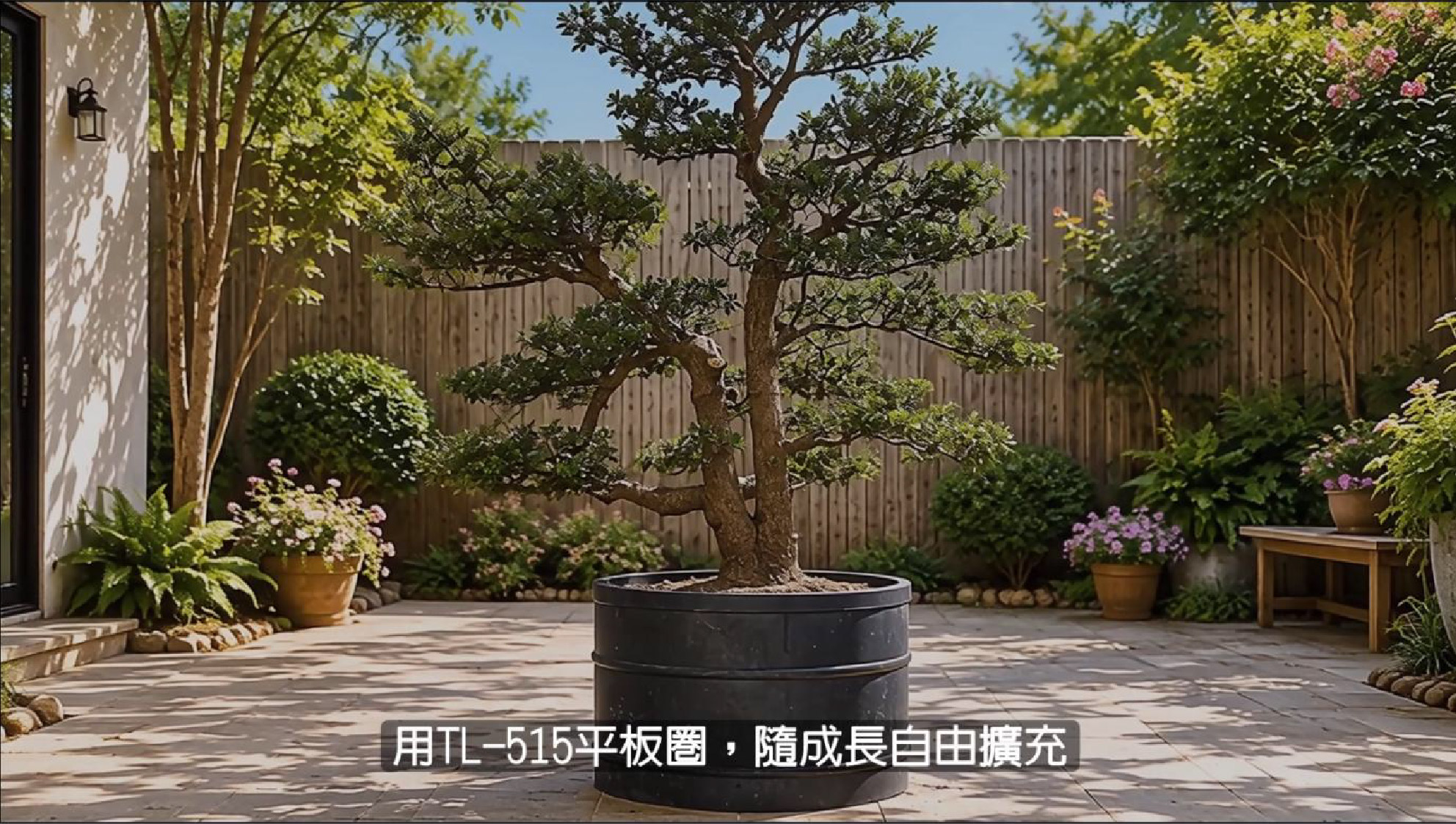
Tree Landing Fences aren't limited to use on soil — they can also be placed directly on concrete surfaces, allowing households without large plots of land to create their own mini garden or small farm in a yard or on a rooftop, greatly increasing planting flexibility.
Traditional Retaining Boards vs. TL-515 Tree Landing Fences: A Comparison
Overall, traditional retaining boards (black boards) address the basic need to “contain soil,” while the TL-515 Tree Landing Fence starts from cultivation logic itself, factoring in root management, water and fertilizer utilization, and transplanting efficiency for a more complete planting solution. The comparison below outlines the differences:
|
Comparison Item |
TL-515 Tree Landing Fence |
Traditional Retaining Board (Black Board) |
|
Fixing Method |
Modular structure, easy to assemble & disassemble, stable once installed |
Requires manual tying to secure; prone to loosening over prolonged use |
|
Size Flexibility |
10 size combinations, freely connectable, unlimited width |
Mostly fixed roll-form sizes, lower flexibility |
|
Root Management |
Promotes concentrated root growth and full root ball formation |
Only basic root-barrier function; root ball development not emphasized |
|
Transplanting Benefits |
Root ball retains water well; high transplant survival rate; mechanized operation takes about 3 minutes |
Transplanting still requires manual digging while preserving the original soil clump |
|
Flood Prevention Design |
Supports the raised-bed method; can be elevated to prevent flooding, suitable for low-lying or poorly drained areas |
Main function is soil containment; flood prevention is not a specific design focus |
|
Fertilizer Utilization |
Water-and-fertilizer-retaining design reduces fertilizer loss |
Generally lacks a water-and-fertilizer-retaining structural design |
|
Storage & Transport |
Easy to disassemble, store, and transport, saving time, effort, and space |
Mostly roll or sheet form; storage and transport limited by size |
|
Material Durability |
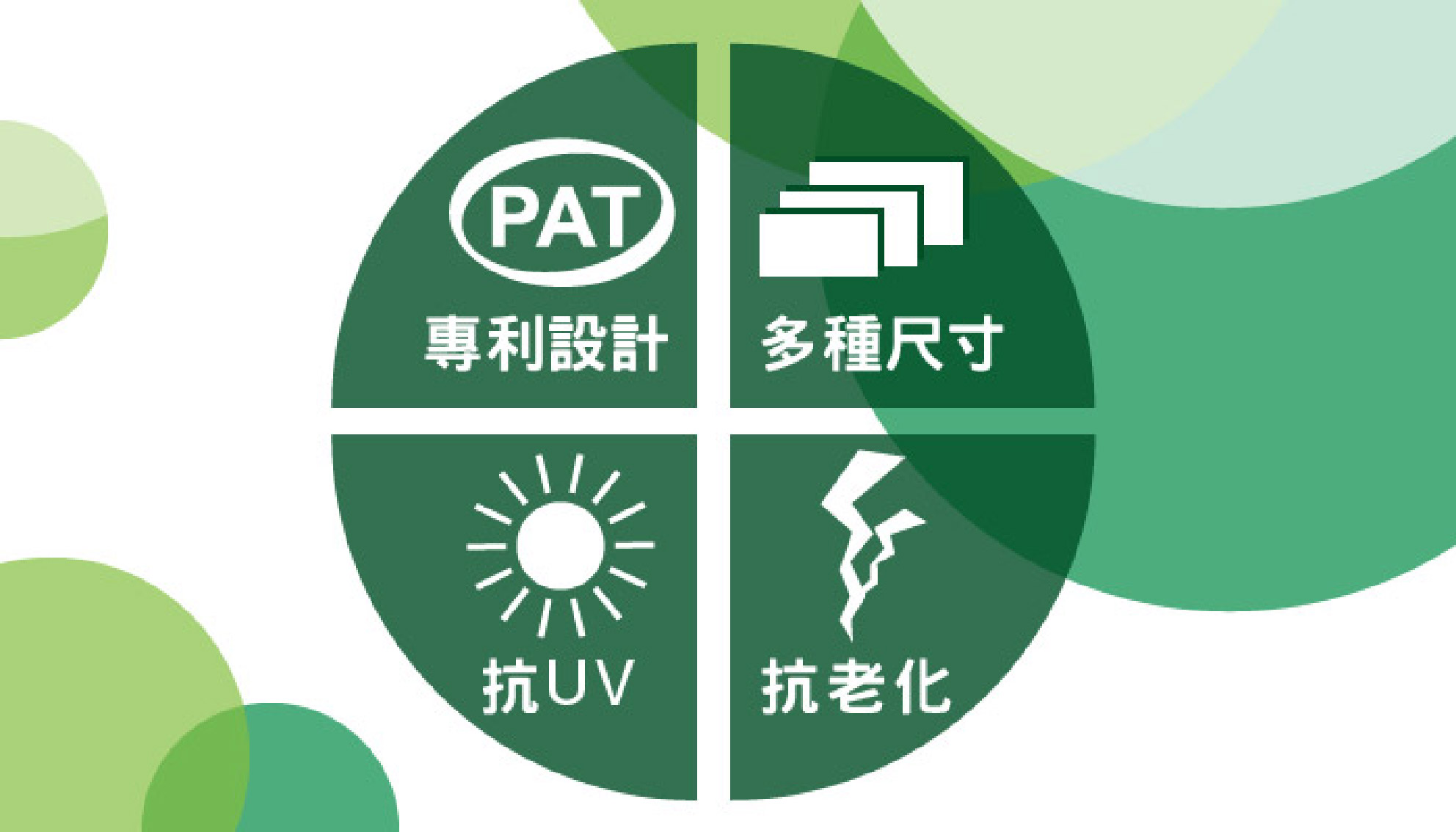
Made from high-quality plastic, resistant to aging and cracking, reusable |
Many products also claim good weather resistance, but reusable lifespan is not emphasized |
Frequently Asked Questions (FAQ)
Can Tree Landing Fences be used on concrete ground?
Yes. The Tree Landing Fence's soil-containment structure doesn't need to rely on native soil — it can be placed directly on a concrete surface and filled with imported soil, making it suitable for creating mini gardens or small farms on rooftops, concrete courtyards, and similar settings.
Can Tree Landing Fences be used together with traditional black boards?
The two systems use different fixing logic, so it's best to plan the planting area around a single system to avoid structural instability from mixing them. If a site already uses traditional black boards, it's recommended to re-plan the containment area when switching to Tree Landing Fences.
What if the size isn't tall enough? Can they be stacked for extra height?
TL-515 offers five height options ranging from 30H to 91H. It's recommended to choose the specification that matches your plants' root depth and soil requirements directly, to ensure a stable structure and good drainage.
How much difference does it make for transplanting efficiency?
Compared with traditional methods that require manual digging while preserving the original soil clump, the complete root ball developed with Tree Landing Fences, combined with mechanized operation, can shorten per-plant transplanting time to about 3 minutes. The root ball's strong water retention also noticeably improves transplant survival rates.
Conclusion
From soil mounding to traditional black boards, and now to the raised-bed method and Tree Landing Fence systems, the evolution of garden retaining solutions really reflects a shift in cultivation thinking — from simply “containing soil” to a complete cultivation system that also considers root management, water and fertilizer utilization, and transplanting efficiency. With 10 modular size combinations, the TL-515 Tree Landing Fence lets landscape gardeners, economic tree growers, and agricultural producers mix and match according to actual needs, making it a worthwhile alternative to consider beyond traditional retaining boards. If you're planning a related planting area, feel free to contact us for customized size recommendations based on your planting scale and terrain conditions.