- Blog
- 2026/10/02
Quick Answer
Plastic plant nursery pots are injection-molded containers used by commercial growers, propagation nurseries, and greenhouse operations to root, grow, and transport young plants before sale or transplanting, distinct from decorative consumer planters in their emphasis on functional features like drainage, stacking efficiency, and root training geometry. Buyers sourcing plastic nursery pots in bulk should prioritize material durability under repeated handling and UV exposure, drainage and root-training design, and stacking or nesting efficiency for shipping and storage, since these functional characteristics directly affect grower productivity and plant health outcomes at commercial scale.
Why Commercial Nursery Pots Differ From Consumer Planters
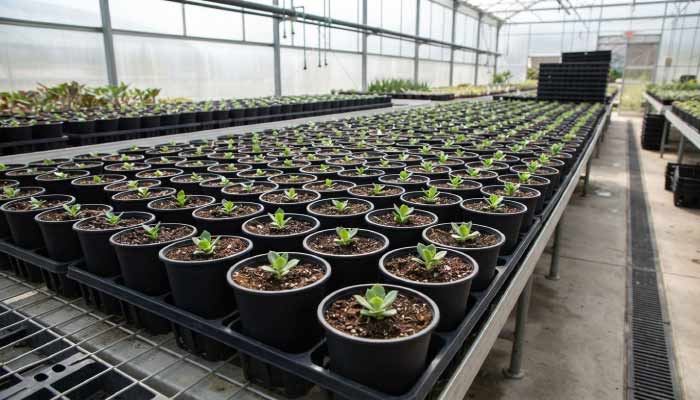
While a consumer decorative planter is judged primarily on appearance, a commercial nursery pot is judged on how well it performs across an entire production cycle — supporting healthy root development, surviving repeated handling by nursery staff, and nesting or stacking efficiently for transport and storage. These functional priorities shape nearly every design decision in a well-engineered nursery pot, from wall thickness to drainage hole placement.
- Commercial nursery pots prioritize root health features like drainage and, in some designs, root-training geometry over decorative appearance
- Wall thickness and material selection are optimized for repeated handling durability rather than aesthetic finish
- Stacking and nesting efficiency directly affects shipping cost and storage space at commercial volume
Material Durability Under Commercial Growing Conditions
Nursery pots used in commercial growing operations face repeated handling, stacking, and often extended outdoor UV exposure across one or more growing seasons, and material selection directly determines how well a pot withstands these conditions without cracking, becoming brittle, or degrading prematurely. Buyers should specify UV-stabilized polypropylene or polyethylene resin formulations for pots intended for extended outdoor use, since standard non-stabilized resin can become brittle and crack well before a pot's intended service life ends.
|
Material Consideration |
Why It Matters |
|
UV stabilization |
Prevents premature brittleness and cracking from extended outdoor sun exposure |
|
Wall thickness |
Affects resistance to cracking during repeated handling and stacking pressure |
|
Resin type (PP vs. PE) |
Affects flexibility, impact resistance, and cold-weather performance |
|
Recycled content |
Increasingly relevant for growers with sustainability sourcing requirements |
Drainage Design and Root Health
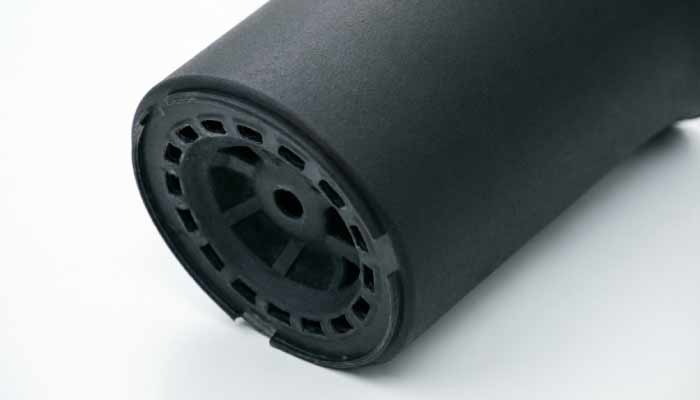
Adequate, well-distributed drainage holes are essential to preventing root rot and supporting healthy root development, and drainage hole placement, size, and number should be evaluated relative to the specific growing media and irrigation practices a buyer's customer base typically uses. Pots with poorly designed drainage can trap excess moisture even when growers follow otherwise sound watering practices, leading to plant health problems that get attributed to grower error rather than the actual pot design deficiency.
- Evaluate drainage hole count and distribution across the full pot base, not just a single central hole
- Confirm drainage hole size is appropriate for the target growing media, since fine substrates can clog undersized holes
- Consider elevated base ridges or feet, which can improve drainage and airflow beneath the pot
Root Training and Air-Pruning Geometry
Some commercial nursery pot designs incorporate root-training features, such as vertical ribbing or air-pruning slots, specifically engineered to prevent root circling — a common problem where roots grow in a spiral pattern around the inside of a smooth-walled pot, potentially restricting the plant's growth after transplanting. Buyers serving growers focused on seedling and young plant quality should consider offering root-training pot designs as part of their product line, since this feature can be a meaningful differentiator for growers who prioritize transplant success rates.
Vertical Ribbing Designs
Vertical ribs along the interior pot wall guide root growth downward rather than allowing roots to circle, encouraging a more fibrous root structure that transplants more successfully.
Air-Pruning Slot Designs
Air-pruning designs use strategically placed openings that expose root tips to air, which naturally stops root elongation at that point and encourages branching, producing a denser root mass within the pot.
Stacking and Nesting Efficiency
Because nursery pots are typically shipped and stored in large quantities, stacking and nesting efficiency directly affects a buyer's shipping cost per unit and warehouse storage space requirements. Pots designed with minimal wall taper can nest very tightly for shipping but may be more prone to sticking together during use, while pots with more pronounced taper separate more easily but consume more shipping volume per unit — a genuine engineering tradeoff buyers should discuss directly with their supplier based on their specific logistics priorities.
- Evaluate nesting ratio (units per stack height) to estimate shipping container and warehouse space efficiency
- Test sample pots for ease of separation after nesting, since overly tight nesting can create handling frustration for end users
- Discuss wall taper angle tradeoffs directly with your supplier relative to your specific shipping and handling priorities
Color and Heat Absorption in Different Climates
Pot color affects more than shelf appearance for commercial nursery containers, since darker colors absorb more solar heat and can raise root zone temperature meaningfully in sun-exposed conditions, which may benefit growers in cooler climates but risk overheating root systems in hot climates. Buyers supplying growers across different climate zones should consider offering color options suited to each region's typical growing conditions rather than assuming a single standard color serves all customers equally well.
Common Nursery Pot Sizes and Applications
- Small propagation cells and plug trays, used for seed starting and initial rooting of cuttings
- Standard round nursery pots (typically measured in inches or liters), used for general young plant growing
- Square nursery pots, offering more efficient bench and shipping space utilization than round equivalents
- Deep root trainer pots, designed specifically for species with long taproot development needs
Evaluating a Plastic Nursery Pot Supplier
- Request material specification documentation confirming UV stabilization level appropriate for your customers' typical use duration
- Evaluate drainage design and, if relevant, root-training geometry against your target grower segment's priorities
- Test nesting and stacking efficiency with actual sample units before committing to bulk order quantities
- Confirm the supplier's minimum order quantity and lead time align with your seasonal demand planning needs
Recycled Content and Sustainability Considerations
Growers and nursery operations are increasingly factoring recycled plastic content and end-of-life recyclability into their purchasing decisions, and buyers should discuss available recycled content options with their supplier, understanding the tradeoffs between recycled content percentage and material consistency or structural performance. Some growers specifically seek out nursery pots made with post-consumer or post-industrial recycled content as part of their own sustainability positioning to their customers.
- Ask suppliers what recycled content options are available and how this affects material consistency or durability
- Confirm whether recycled-content pots meet the same UV stabilization and structural performance standards as virgin resin equivalents
- Consider whether recyclability at end-of-life is a relevant purchasing factor for your grower customer base
Custom Color and Branding Options
Nursery pot color can serve functional purposes beyond aesthetics — darker colors absorb more heat, which can benefit root zone warming in cooler climates, while lighter colors reflect heat and may better suit hot climate growing conditions. Buyers developing a branded product line should discuss both functional color considerations and any custom branding or embossing options available through their supplier.
Seasonal Demand Planning and Inventory Timing
Commercial nursery pot demand is strongly seasonal in most markets, tied closely to regional growing seasons and propagation cycles, and buyers who fail to align order timing with this seasonality risk either missing peak demand windows or carrying excess inventory through the off-season. Working with a supplier who understands typical seasonal demand patterns in your target market, and who can commit to lead times that align with your customers' planting calendars, meaningfully reduces both stockout and overstock risk.
- Map your supplier's lead time against your customers' typical planting season to avoid missing peak demand windows
- Discuss whether your supplier can support smaller, more frequent replenishment orders during peak season
- Plan off-season ordering to take advantage of potentially more flexible lead times and pricing
Weight and Handling Efficiency for Nursery Staff
Beyond material durability, the actual weight of empty nursery pots affects handling efficiency for nursery staff who may move, fill, and reposition large quantities of pots throughout a single workday. Excessively heavy pot designs, even if structurally robust, can meaningfully slow down high-volume nursery operations and contribute to staff fatigue over repeated daily handling. Buyers should discuss wall thickness optimization with their supplier to find the point where structural durability is maintained without unnecessary added weight.
Common Mistakes When Sourcing Nursery Pots in Bulk
- Selecting non-UV-stabilized resin for pots intended for extended outdoor growing seasons
- Underestimating drainage hole requirements relative to the actual growing media and irrigation practices used
- Overlooking nesting and stacking efficiency, resulting in higher-than-expected shipping and storage costs
- Failing to align order timing with seasonal demand planning, resulting in inventory shortages during peak growing season
Working With a Supplier on Custom Nursery Pot Development
Buyers with specific grower segment needs — particular species requirements, unusual size specifications, or specialized root-training features — may benefit from working directly with a manufacturer on custom pot development rather than relying on standard catalog offerings alone.
- Share detailed growing application requirements, including typical growing media and irrigation practices your customers use
- Discuss root-training geometry needs relevant to the plant species your customer base typically grows
- Request trial quantities of any custom pot design before committing to full production volume
Frequently Asked Questions
Q. What makes a nursery pot suitable for commercial growing versus consumer use?
Commercial nursery pots prioritize functional features like drainage, root health, and stacking efficiency over decorative appearance.
Q. Why is UV stabilization important for nursery pots?
UV-stabilized resin resists becoming brittle and cracking during extended outdoor sun exposure across growing seasons.
Q. What is root-training pot geometry?
Features like vertical ribbing or air-pruning slots that guide root growth and prevent root circling, improving transplant success.
Q. How does stacking efficiency affect sourcing costs?
Tighter nesting reduces shipping volume and storage space needs, though it can affect how easily pots separate during use.
Q. Should I choose round or square nursery pots?
Square pots generally offer more efficient bench and shipping space utilization, while round pots remain a widely familiar standard.
Q. Does recycled content affect nursery pot performance?
It can, depending on the recycled content percentage and source, so buyers should confirm structural performance is maintained.
Q. What drainage design should I look for in bulk nursery pots?
Well-distributed drainage holes sized appropriately for your customers' typical growing media, not just a single central hole.
Q. Can nursery pots be customized for specific plant species needs?
Yes — manufacturers can often develop custom sizes and root-training geometries for specific grower segment requirements.
Conclusion
Sourcing plastic nursery pots for commercial growers at scale comes down to evaluating material durability, drainage and root health design, and stacking efficiency together, rather than treating nursery pots as a simple commodity product distinguished only by price. Buyers who understand these functional priorities and communicate them clearly to their supplier consistently deliver products that genuinely support grower success rather than merely meeting a basic container specification.
As commercial growing operations continue to prioritize transplant success rates and operational efficiency, working with a manufacturer who understands root health design and logistics efficiency together offers a meaningfully stronger foundation for a nursery pot product line that earns repeat business from professional grower customers.
Buyers who build these functional evaluation criteria into their standard nursery pot qualification process ultimately achieve the strongest long-term relationships with the commercial grower customers this product category is built to serve.
Pairing that functional evaluation with realistic seasonal lead-time planning and attention to handling weight rounds out a sourcing approach that supports growers not just at the point of purchase but throughout an entire demanding growing season.