- Blog
- 2026/11/06
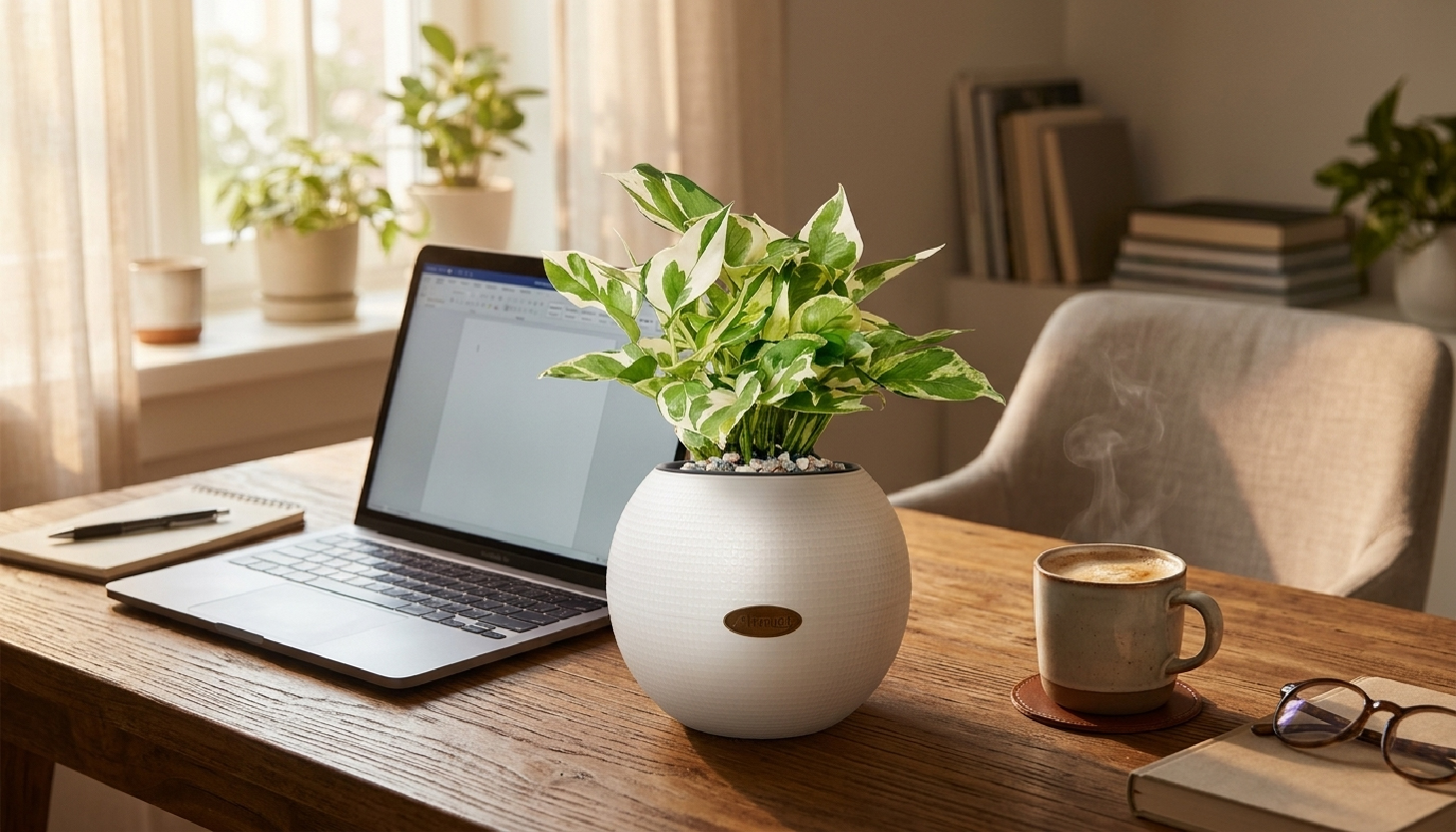
You come back from a business trip and half the plants on your desk have dried out. Or you want a plant for the living room or your office desk, but ordinary pots feel too plain for the space. If either sounds familiar, the Aiermei L-188 Golf Ball Shaped Flower Pot (Self watering) may be just what you're looking for: it's shaped like a golf ball, and it's also a self-watering pot that “drinks” on its own.
A Golf Ball Silhouette with a Raised Woven Texture
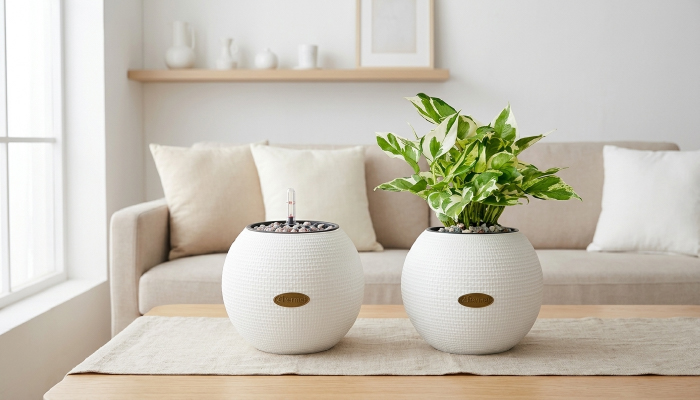
The first thing that catches your eye about the L-188 is its shape. The whole body is a round ball, just like an oversized golf ball, while the surface is covered in a raised woven pattern that looks like fine rattan and has a pleasant texture to the touch. When light falls on the pot, the weave creates soft highlights and shadows that give it more depth, so it looks good on display even before you plant anything.
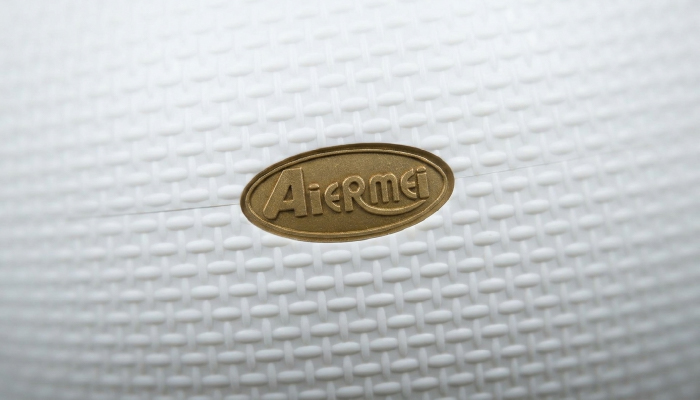
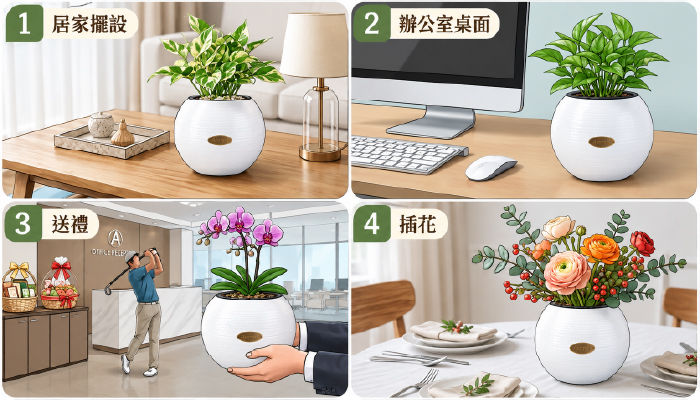
The ivory white color is a little warmer than pure white, so it never feels cold, and the gold Aiermei badge on the pot stands out nicely against it. This color works well with wooden, Scandinavian or minimalist modern interiors. At 20D x 16.8H cm, it's just the right size for a desk, shelf or windowsill without taking up much space. Its look also makes the L-188 suitable for many uses:
1. Home décor: Place it on a coffee table, in the entryway or on a desk with a pothos or arrowhead plant, and it becomes a small highlight in the room.
2. Office desk: When work gets busy, it's easy to forget to water. The self-watering design comes in handy, and the round shape adds a touch of fun to your desk.
3. Gifts: Orchids are a classic gift for grand openings and promotions. Pair one with a golf ball shaped pot, and it becomes a more memorable gift for golf-loving family members, managers or clients.
4. Flower arranging: When it isn't holding a plant, it also works as a vase. Add a few seasonal stems, and you have a charming little table arrangement.
What Is a Self-Watering Pot? How the Cotton Wick Works
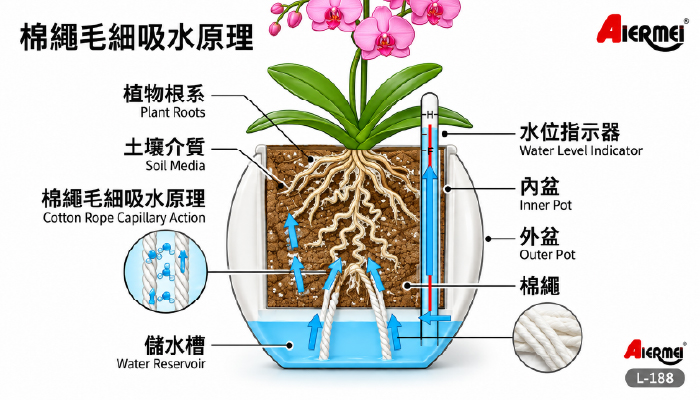
Beyond its looks, what helps busy people keep their plants healthy with the L-188 is its self-watering design. A self-watering pot has two layers: the inner pot holds the plant, the outer pot holds water, and a cotton wick connects the two. One end of the wick sits in the water and the other touches the soil, so water slowly travels up the wick and keeps the soil evenly moist. Think of the wick as a very thin straw: when the plant is thirsty, it quietly brings the water up.
Which Plants Grow Well in a Self-Watering Pot?
Because the soil stays moist all the time, self-watering pots are better suited to plants that like moist conditions. Here's a quick guide:
| Type | Plant Examples | Recommendation |
| Suitable | Foliage plants such as pothos and arrowhead plants | Ready to use |
| Use with care | Orchids such as Phalaenopsis | Roots dislike staying wet for long; when planting in sphagnum moss, don't fill the water too high |
| Not recommended | Cacti and succulents | Choose a regular pot with drainage instead |
How to Use a Self-Watering Pot: Five Steps and Reading the Float
Once you've picked your plant, you're ready to start, and no tools are needed:
1. Plant it in the inner pot and make sure the wick touches the soil.
2. The first time, water the soil and the wick thoroughly so the water can start moving up.
3. Place the inner pot into the outer pot, then fill the reservoir with water.
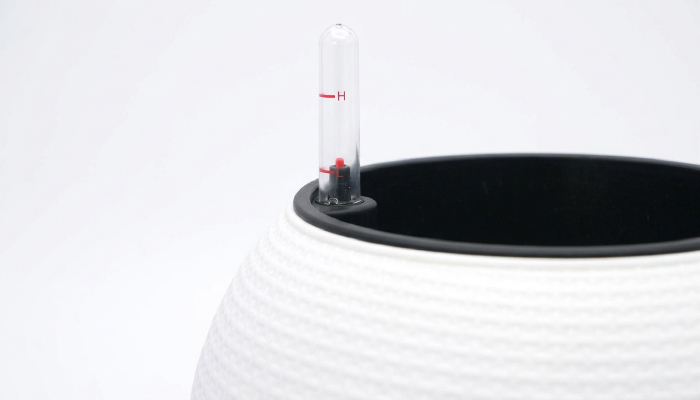
4. Check the float on the water level indicator to see the current water level.
5. After that, just top up whenever the water level drops.
The L-188 comes with a water level indicator whose red float moves up and down with the water: it rises when there's plenty of water and sinks when the water runs low. There's no need to take the pot apart every day to check. One glance tells you whether it's time to add water, and it also makes overfilling by accident less likely.
That said, self-watering doesn't mean you can leave it alone completely. Build these three small habits, and your plants will grow even better:
1. Don't overfill: Keep the soil in the inner pot from sitting in water, which can suffocate the roots.
2. Change the water regularly: When the water turns cloudy or starts to smell, replace it and give the reservoir a quick rinse.
3. Choose the right spot: Place it somewhere with good airflow and the right light for your plant.
Self-Watering Pot Care: Five Common Mistakes to Avoid
Self-watering doesn't mean hands-off. When plants run into trouble in these pots, it's often because of a few small details like these:
| Common Mistake | Possible Effect | What to Do |
| Filling the water too high | The soil sits in water for long periods, and the roots can run short of oxygen | Keep the water at a moderate level and use the float to judge when to refill |
| Never changing the water | The water turns cloudy and develops odors | Change the water once it turns cloudy and rinse the reservoir at the same time |
| Thinking it never needs watering | Once the water runs out, the plant still goes thirsty | Check the float regularly and refill when the level drops |
| Choosing an unsuitable plant | Plants that dislike moisture may suffer root damage | Check the plant's needs before deciding to use it |
| Placing it in a dark or stuffy spot | The plant struggles, and the pot is harder to keep fresh | Place it where there's airflow and suitable light for the plant |
How Often Should You Add Water? Let the Float Decide
Water is used up at different rates depending on the season and where the pot sits, so rather than adding water on a fixed schedule, it's better to go by the water level the float shows. If the leaves start turning yellow, first check whether the water level is too high, then adjust based on how the plant is doing. Once these habits become routine, caring for plants gets much easier.
L-188 vs. L-189: What's the Difference?
Besides the L-188, Aiermei also offers the L-189, which has the same look but no water level indicator. Here's how the two compare:
| Feature | L-188 | L-189 |
| Self-watering (cotton wick) | Yes | Yes |
| Float water level indicator | Yes | No |
| How to check the water level | Look at the float | Lift the pot to feel its weight and check how dry the soil is |
| Best for | Beginners who want to see the water level at a glance | Experienced plant owners who prefer to check for themselves |
Both pots are made in Taiwan. With over 40 years of plastics manufacturing experience, Aiermei pays close attention to both design and durability, so a good-looking pot can keep your plants company for years to come.
FAQ
Q: The L-189 has no water level indicator. How do I know when to add water?
A: Gently lift the pot. If it feels lighter, the water is almost used up. You can also touch the top layer of soil and add water when it feels dry.
Tip: Push your finger about one to two knuckles deep into the soil in the inner pot. If it feels completely dry inside and the cool feeling is gone, the reservoir has been empty for a while, and you should add water right away.
Q: Where should I place the L-188 and L-189? Can they sit in the sun?
A: We recommend a bright, well-ventilated indoor spot, such as near a living room window, on a desk at home or on an office desk. Long exposure to sunlight can cause the pot to fade, so keep it out of direct sun. If you'd like to place it on a balcony, choose an east- or north-facing balcony with gentler light, or a well-ventilated spot under the eaves or behind a shade net. As for plants, shade-tolerant foliage plants such as pothos, arrowhead plants, peace lilies and ferns grow well without strong sunlight.
Q: Does the cotton wick need replacing over time?
A: We generally recommend replacing it roughly every six months to a year, and a good time is when the plant has grown and needs repotting or dividing. After a while, dirt can build up on the wick and slow down water absorption. If you notice the soil drying out faster than usual, check the condition of the wick.
Tip to extend its life: Each time you wash the pot, take out the wick, scrub it well in clean water and squeeze it dry to remove any algae and slime. This can extend its life by a few months.
A self-watering pot doesn't just make plant care easier; it can also be a good-looking piece of décor. With its rounded golf ball shape and practical self-watering design, the L-188 works well whether you keep it for yourself or give it as a gift. To learn more about its specifications and colors, visit the L-188 Golf Ball Shaped Flower Pot (Self watering) product page. If you don't need a water level indicator, take a look at the L-189 Golf Ball Shaped Flower Pot. You can also browse our Ball Style Pot series for more designs.
A Good-Looking, Easy-Care Pot for You or a Friend
Whether it sits on your desk at home or at work, or goes to a golf-loving friend as a small gift, the L-188 makes growing plants a little easier. To order or learn more, feel free to contact us via LINE, our online form or by phone!
Ask Us on LINEOnline Contact FormCall +886-4-8961293
 Reading on a computer? Scan the QR code with your phone to add us on LINE