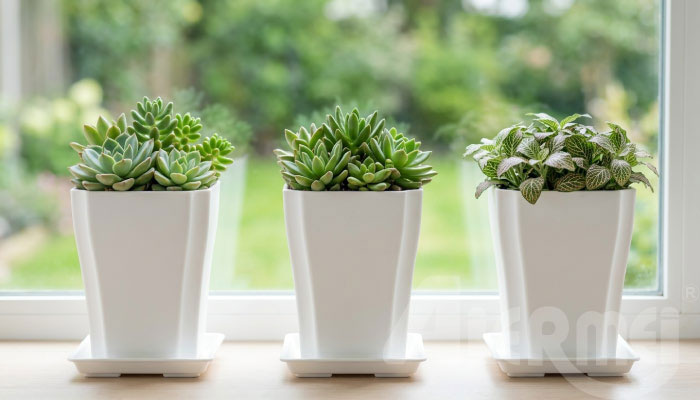
- Blog
- 2026/09/10
In the years since the pandemic, windowsills, balconies, and office desks have filled up with more succulents than ever — but a lot of people only realize after bringing one home that the pot they have on hand simply doesn't work. Either it's too shallow and the roots shrivel, or there's no drainage hole and water gets trapped at the bottom, suffocating and rotting the roots. This article isn't about how to care for succulents — it's about the pot itself: scenario, sizing, material, drainage, and wholesale sourcing, all in one place, so you know exactly how to choose a succulent pot the right way.
1. Start With Scenario and Plant Type, So You Don't Pick the Wrong Succulent Pot
Where a pot will sit and which type of succulent it's for directly affects which pot shape and material suits it best. Taking a few minutes to confirm these two things before you shop is far more useful than copying whatever's trending online.
Where Will the Pot Sit? Indoor, Balcony, Storefront, and Office Each Have Different Needs
Whether a pot is going indoors, on a balcony, in a storefront display, or in an office actually changes what you should prioritize — because the conditions in each environment are quite different!
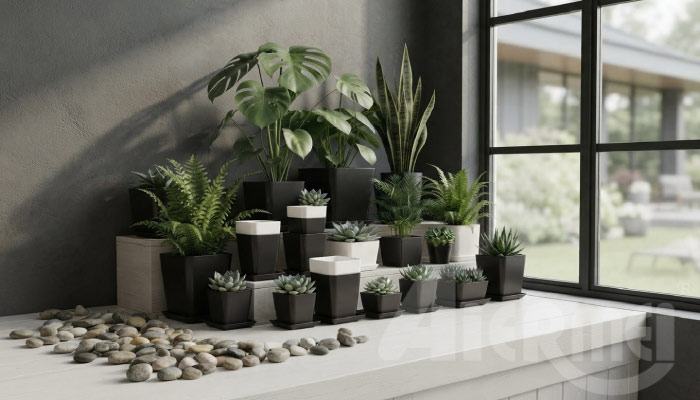
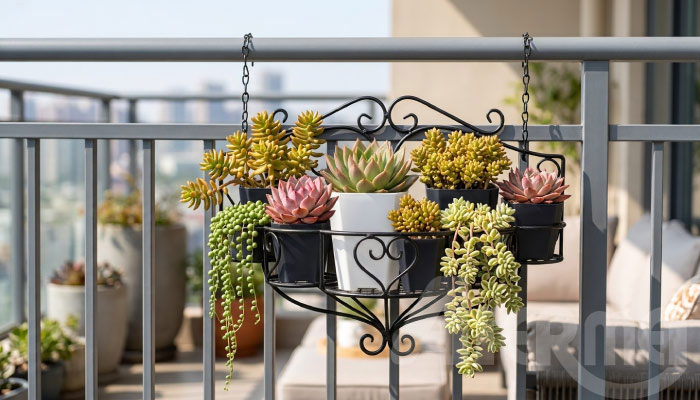
Indoor spaces tend to have weaker light and poorer airflow, so water doesn't evaporate as easily after watering — it's best to choose a pot with fast drainage and a breathable material, to avoid prolonged dampness inside the pot that harms root health. A balcony is the opposite: direct sun exposure and more wind mean weather resistance and UV stability of the material matter more, so the pot holds up over time without becoming brittle or fading.
Storefront displays call for visual consistency, so retailers typically choose a unified series with a coordinated look for a more polished display. For arranged succulent compositions — whether for retail display or home décor — shallow, wide-mouth pots tend to be preferred, since they make it easier to arrange multiple plants and varieties together for a richer combined-planting effect.
Which Pot Suits Which Common Succulent Type?
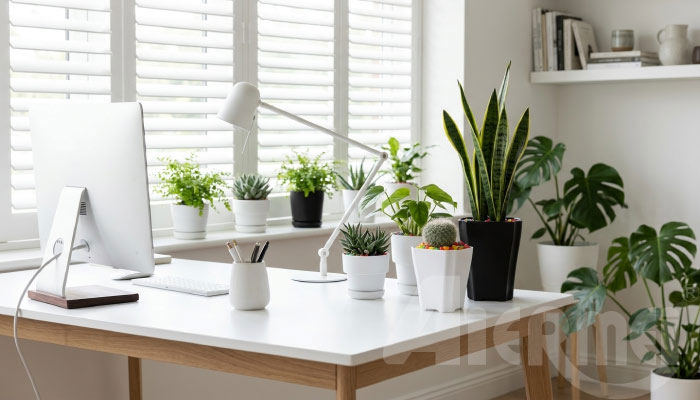
Common succulents can generally be grouped by growth form, and each form calls for a different kind of pot:
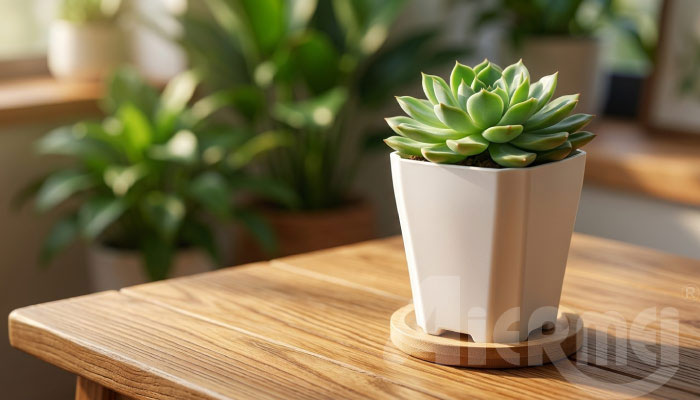
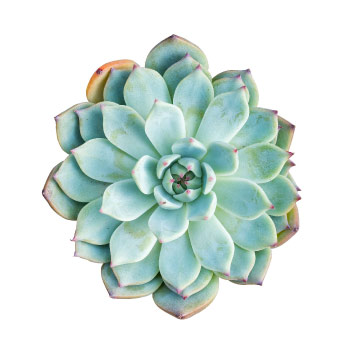
Rosette-type succulents (such as Graptopetalum 'Titubans' or Echeveria 'Momotarou') spread their leaves outward in a flower-like shape and typically have shallow roots, so a pot with a wide opening and shallow body works best, giving the leaves room to spread outward.
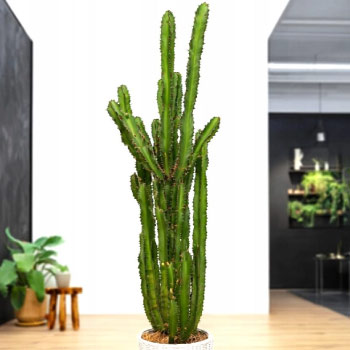
Columnar succulents (such as Senecio articulatus or Sansevieria trifasciata) grow upward with a tall, slender form and a higher center of gravity, so a pot with a deeper body and a stable base is recommended to keep it from becoming top-heavy and tipping over.
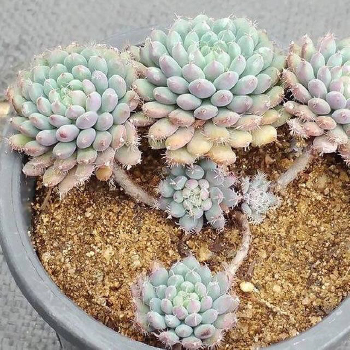
Clustering succulents (such as Haworthia cooperi or Graptopetalum 'Titubans') continuously produce offsets, gradually forming a dense cluster, so it's best to start with a wider-mouth pot that leaves room to grow, rather than needing to repot again soon after planting.
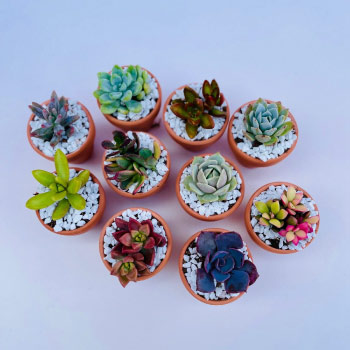
For mini succulents, or combination plantings mixing several varieties, a 1–2 inch pot works well — whether as a small desktop accent or part of a richer combined arrangement, they're always a crowd-pleaser!
2. How to Choose a Succulent Pot: Sizing, Material, and Drainage
Once you've confirmed the scenario and plant type, the next step is the three practical factors that matter most when choosing a pot: size, material, and drainage design.
How to Choose a Succulent Pot Size: From 1–2 Inch Mini Pots to Large-Diameter Containers
Succulent pot sizes are typically labeled in inches, but a "3-inch pot" from one brand may not have the exact same inner diameter or depth as another. Don't just look at the outer diameter when shopping — check the inner diameter and usable planting depth too, so it actually matches the real size of the plant's root ball. As a general rule, the root ball's diameter plus about 0.5–1 cm of growing room on each side gives a good working diameter; pot depth depends on how deep the roots run and whether a drainage layer is needed — too shallow and the plant dries out quickly, too deep and water tends to pool and suffocate the roots.
Recessed, Elevated Base Design: The Key to Drainage and Airflow
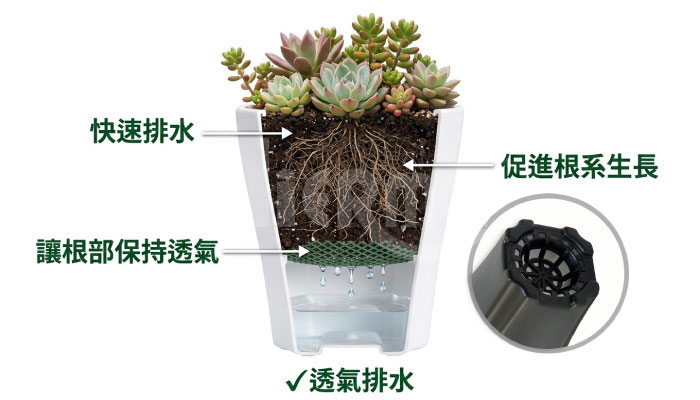
Many people focus only on shape and size when buying a pot, overlooking how much the base structure affects drainage and root health — without a properly elevated base, soil sits directly against the bottom of the pot, water can't drain freely, and over time the roots stay damp and oxygen-starved, which can lead to root rot. A recessed base design, by contrast, lets excess water flow into a space at the bottom before draining out through the holes, while also creating an air buffer at the base that improves soil aeration and reduces the chance of drainage holes getting clogged by soil or roots — keeping root rot risk to a minimum. Whether it's a small succulent pot on a balcony or a large tree planter in a garden, this kind of base structure significantly lowers the risk of standing water after watering, and it's a detail worth paying attention to for anyone who values durability and practicality in a pot.
One thing worth noting: if you're ordering dozens of pots at once, we recommend requesting samples first — actually planting in them and testing with water — before confirming carton quantities, damage protection, and lead times; the next section covers how drainage holes and saucers should be paired to avoid standing water.
Choosing a Saucer: What You Need to Know
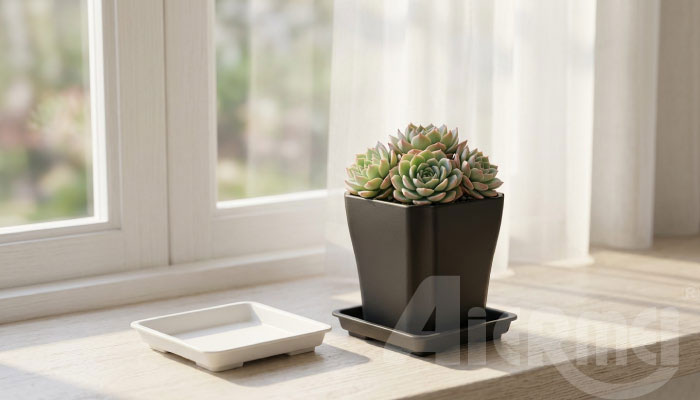
A well-draining pot lets excess water flow out through the base holes quickly, and if the pot sits directly on the floor or a tabletop, that means a puddle before long — messy, and time-consuming to clean up. This is where a properly matched saucer becomes important — it catches the excess water immediately, keeping the murky, soil-mixed runoff from dripping straight onto floors, tabletops, or cabinets, and keeping the whole setup cleaner overall.
When choosing a saucer, pay attention to the position and size of its drainage holes, since that directly affects how fast it drains after watering; holes that are too small tend to clog with growing medium or roots, so it's worth checking periodically that they stay clear. The saucer's own depth matters too — one that's too shallow can overflow after just one extra watering; if you'd rather not have visible standing water in the saucer, look for one with a built-in seepage layer, or simply get in the habit of emptying it after watering.
3. Sourcing Succulent Pots Wholesale: Specs, MOQ, and Lead Times
Once size, material, and drainage design are settled, garden shops, horticultural retailers, and e-commerce sellers buying in bulk need to confirm a few more things.
What Specs Should You Confirm for a Succulent Pot Wholesale Order?
Before ordering, it's worth listing out and confirming each of the following: material, color, diameter, depth, unit weight, drainage hole design, whether a saucer is included, quantity per carton, current stock availability, and whether mixed cartons (different colors or sizes in the same box) are possible. The more complete the spec confirmation up front, the lower the back-and-forth cost in communication and stock planning later.
Why Do Carton Packing, Stacking, and Shipping Costs Affect Wholesale Unit Price?
Unit price is only part of the total sourcing cost. Carton volume, stacking efficiency, packaging protection, breakage risk in transit, and how quickly a supplier can restock when you run short all feed into the overall cost of sourcing. It's worth confirming, alongside price comparisons, whether a supplier can provide a spec sheet or formal quotation to make internal cost calculations and comparisons easier.
The Advantage of Taiwan Manufacturing: Stable Quality and Flexible Lead Times
The biggest headache in sourcing succulent pots wholesale is inconsistent specs and unpredictable lead times. Locally manufactured plastic pots from Taiwan are generally easier to communicate with and track on sample adjustments, batch-to-batch quality consistency, and lead-time flexibility compared with cross-border sourcing, and tend to respond faster when you need a minor spec tweak or an urgent restock. Before committing to a partnership, it's still worth requesting samples and confirming carton and lead-time terms, to make sure they match your channel's sourcing rhythm.
FAQ
Q1. What kind of pot is best for succulents?
Succulent roots hate sitting in damp, stagnant conditions, so drainage hole count and base design are the key things to check when choosing a pot. The L-190 Succulent Plant Pot, for example, is designed specifically for succulents with multiple drainage holes and a raised base, letting excess water drain quickly so roots don't stay wet.
Q2. Does a succulent pot need drainage holes?
In general, it's best to choose a pot with drainage holes for succulents. If you're using a pot with no holes, pair it with an inner pot and a controlled watering approach instead. The right choice still depends on the specific plant, growing medium, watering frequency, and environment — not appearance alone.
Q3. Why do succulents often get root rot — is it related to the pot?
Overwatering is a common cause of root rot, but poor pot drainage is just as often the culprit. If a pot has too few drainage holes or isn't properly elevated, water tends to linger at the bottom, and over time the roots start to rot. Choosing a pot with strong drainage performance, like the L-190, can significantly reduce that risk.
Q4. Do succulent pots have to be ceramic? Can plastic work?
Not necessarily. Traditional ceramic pots breathe well, but they're also prone to cracking and are heavier to move around. A faux-ceramic plastic pot like the L-190 keeps that same rustic ceramic look, with multiple drainage holes at the base for airflow, while being noticeably lighter and more impact-resistant — a practical choice for anyone who moves their plants often, or has pets or young kids at home.
Q5. Growing succulents indoors — what do I do about water overflow after watering?
The biggest concern with indoor growing is water stains on floors or furniture after watering. We recommend adding a saucer under the pot — pairing it with the L-190A square pot saucer, for example, catches the excess water effectively, keeping your succulents properly moist while keeping your indoor space clean and dry.