- Blog
- 2026/11/04
"How do I install garden edging?" "Will it come loose quickly if it isn't secured properly?" "My planting area isn't a neat rectangle—can I make curves?" These are some of the most common questions from gardening enthusiasts and landscape contractors working with edging boards for the first time. In our previous article, How to Assemble a Garden Edging Board (Planting Ring)? From Site Planning to Proper Raised-Bed Growing, we explained that traditional edging is a black plastic board used to enclose soil and define planting areas, helping prevent soil loss and keep roots from spreading. But how do you actually install it correctly and efficiently?
This article walks through the installation process, fixing methods, and curved designs, answering the most common questions about edging installation. You'll also see how the new-generation modular TL-515 Tree Landing Fence makes installation faster and more flexible.
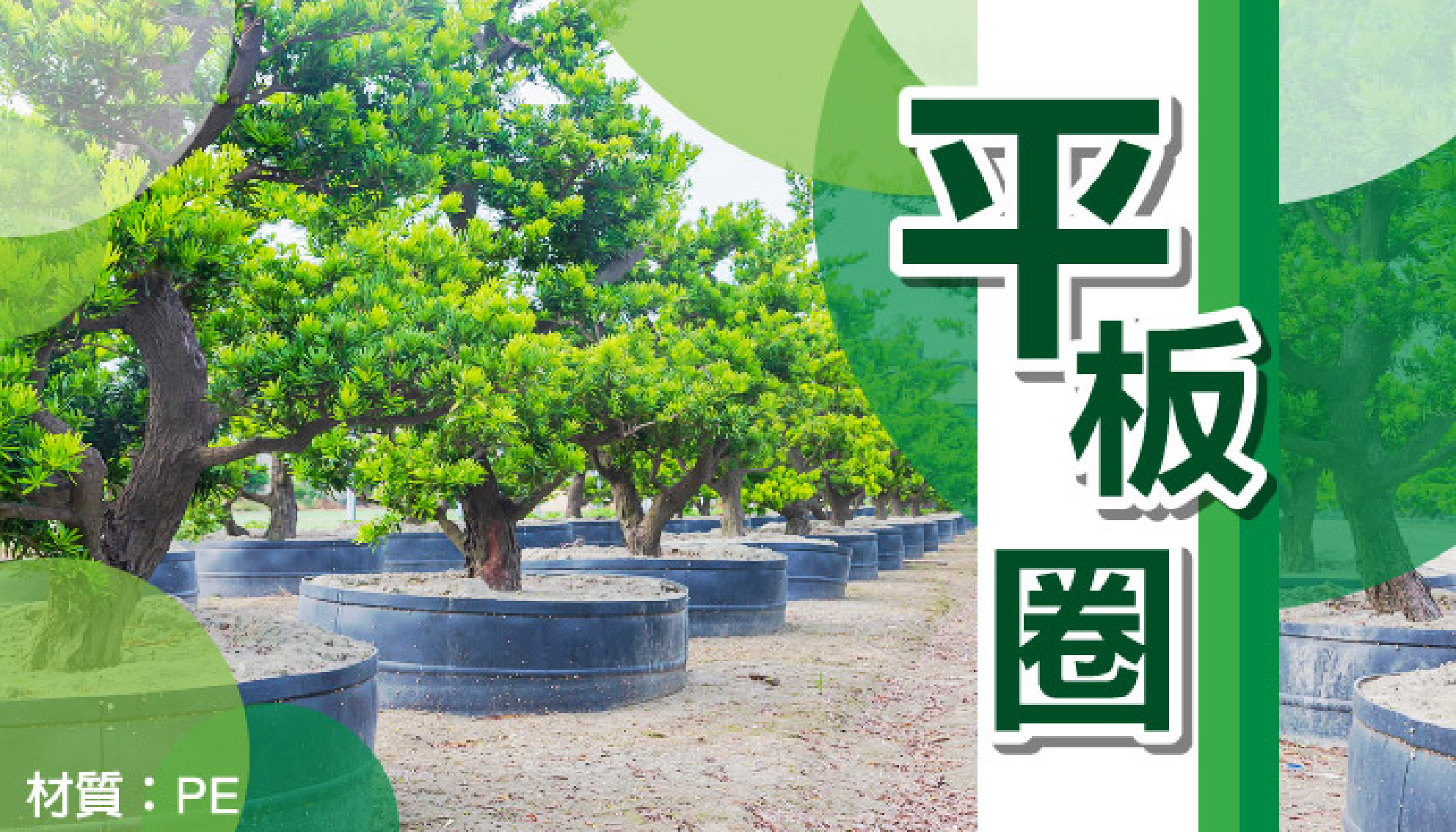
1. How to Install Garden Edging: The Basic Process
Edging may look like just a simple black board, but installation involves several considerations—how it's secured, how well it adapts to the terrain, and how easily it can be cut. Choosing the wrong method not only costs extra time and effort, but can also affect your planting results over the long run.
Installing traditional edging generally follows these steps: first, measure the length of board needed for your planting area; next, unroll the board and shape it around the area; then secure the joints by hand with rope or wire. Whether you need to add bamboo poles or wooden stakes for extra support depends on what you're planting—ordinary flowers and small plants usually don't need it, but large trees and fruit trees, with their heavier root systems and plant weight, often still require bamboo poles or stakes to keep the board from leaning outward under soil pressure.
The process may not sound complicated, but in practice it relies heavily on experience—the bending angle of the board, the tension of the ties, and how deep the stakes go all take a certain feel. First-time installers often need several rounds of adjustment before the edging holds the shape they want.
How Is the New Modular TL-515 Tree Landing Fence Installed?
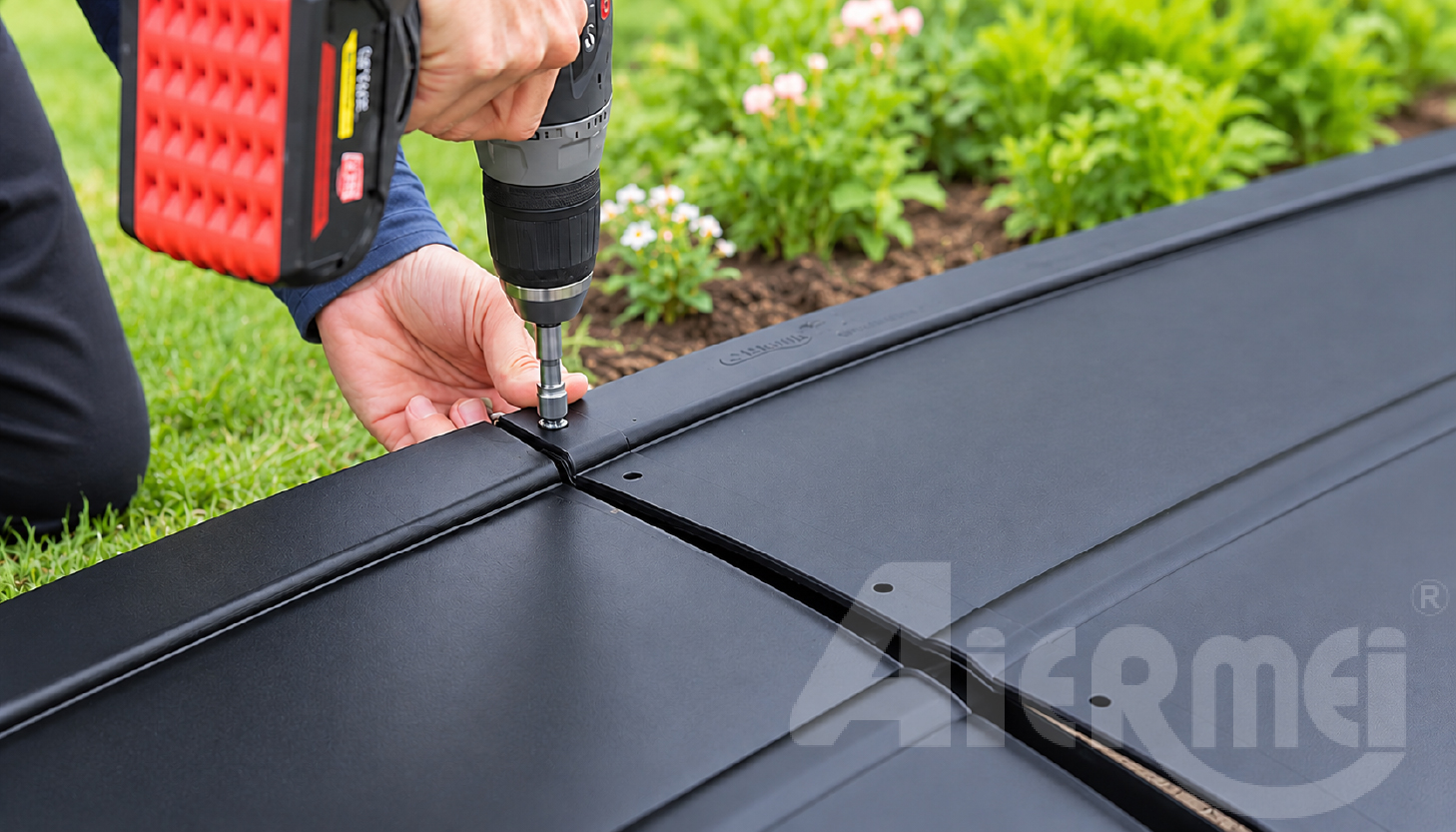
By contrast, a modular edging system such as Aiermei's TL-515 Tree Landing Fence works on a completely different principle: the panels are made as fixed-size units. Adjacent units are first positioned with structural snap-fit joints, then locked together with hexagonal bolts and nuts—no rope ties and no extra support stakes required. Assembly is more like snapping together building blocks, which greatly lowers the skill needed to install it.
2. How to Secure Garden Edging: Common Methods and What to Watch For
Securing the edging is where installation problems most often occur. The traditional approach is to tie the board joints tightly with rope or wire. It's the most widespread and lowest-cost method, but ties are ultimately a "temporary joint"—after long exposure to sun and rain, knots tend to loosen as the material ages, and the boards may gradually shift due to soil pressure or runoff from watering. Regular inspection and reinforcement are needed, and in large or long-term growing areas, maintenance costs keep adding up over time.
The Advantages of Snap-Fit Fixing with the Tree Landing Fence
The modular Tree Landing Fence replaces rope ties with structural snap-fit joints combined with hexagonal bolts and nuts. Units first snap into position, then the joints are tightened with bolts and nuts. Once assembled, they form a stable ring structure that doesn't rely on knots to hold its shape, greatly reducing the need to redo the installation because of loose ties. It's especially well suited to growing areas that need long-term stability with less manpower for inspections and maintenance.
3. Can Garden Edging Be Curved or Arched?
Many landscaping projects and irregular planting sites call for edging that follows the natural contours of the ground with curves or arcs, rather than simple straight lines. With traditional boards, this need often runs into clear installation limits.
Curve Limitations of Traditional Edging
Traditional rolled edging is somewhat flexible and can, in theory, be bent into an arc. In practice, however, bending it too sharply concentrates stress in the material and can cause cracks, reducing its durability over time. And if the planting area has complex curves, the rolled board still needs extra cutting and joining to fit, so installation flexibility is fairly limited.
Because the Tree Landing Fence is built from modular units, you can adjust the angle and arrangement of each unit to create curved or irregularly shaped planting areas—without cutting the panels themselves and without worrying about stress cracks. This is exactly what makes the improved Tree Landing Fence flexible, adaptable, and time-saving.
One customer told us they combined several Tree Landing Fence panels of different sizes with wooden or bamboo supports to build a rectangular succulent bed. Thanks to the fence's versatility, whether you want an arc or a rectangle, you can easily create the planting area you have in mind.
Planning a Curved or Rectangular Garden Bed?
Tell us the length, width, or diameter of your planting area, and we'll help you estimate how many panels and which sizes you need.
4. Traditional Edging vs. Tree Landing Fence: Flexibility, Adaptability, and Time Savings
Bringing together the installation differences covered above, the table below gives a quick comparison of traditional edging and the modular Tree Landing Fence:
| Comparison | Traditional Edging | TL-515 Tree Landing Fence |
| Installation | Tied by hand; large plants also need support stakes | Snap-fit joints + bolt locking; no ties or stakes needed |
| Stability | Needs regular inspection and reinforcement | Stable once assembled; low maintenance |
| Curves / Arcs | Limited bending angle; complex shapes need cutting and joining | Units connect freely; usually no cutting needed |
| Installation Time | Longer | Shorter |
| Skill Required | Relies on hands-on experience | Simple assembly; easy to DIY |
Overall, the Tree Landing Fence offers clear advantages in installation efficiency and long-term maintenance, making it a strong fit for growing areas where saving labor and keeping things stable matter.
No Ties, No Stakes—Assemble It Yourself at Home
Snap-fit joints plus bolt locking make it easy to get right, even on your first install.
5. Frequently Asked Questions
Q1. What tools do I need to install garden edging? Is it hard to DIY?
Traditional edging usually requires rope to secure the joints, and if you're planting large trees or other heavy plants, you'll often need bamboo poles or wooden stakes for extra support as well; ordinary flowers and small plants usually don't need them. With the modular Tree Landing Fence, the units first snap into place with structural snap-fit joints and are then locked with hexagonal bolts and nuts—no ties needed. Most people can easily install it themselves, with no professional skills required.
Q2. What type of bolts and nuts does the Tree Landing Fence use?
The joints are locked with hexagonal bolts and nuts, which are fixed-specification fasteners. They differ from standard Phillips screws and ordinary hex screws, and the two cannot be used interchangeably.
Q3. Can I convert an existing bed with traditional edging into a Tree Landing Fence?
Not directly. Traditional edging and the Tree Landing Fence are different systems, and their parts are not interchangeable. To upgrade to the Tree Landing Fence, the whole area needs to be replaced—the two can't be mixed in a partial retrofit.
Q4. What is the smallest planting area the Tree Landing Fence can form?
Taking the 64L x 30H cm size as an example, a minimum of 2 panels can be joined into a circle with a diameter of about 40.7 cm. This is the smallest planting area that size can form.
How to Choose a Garden Retaining Board? TL-515 Tree Landing Fence
Now that you understand how edging is installed, how it's secured, and the limits of curved installation, the next step is choosing the right edging type and size for your planting needs. For material comparisons and sizing tips, see our article How to Choose a Garden Retaining Board? TL-515 Tree Landing Fence, or visit the TL-515 Tree Landing Fence product page for full specifications of the modular system.
Ready to Plan Your Garden Bed?
Whether it's a home vegetable patch, a succulent bed, or a large-scale planting site, feel free to contact us by email or phone.